
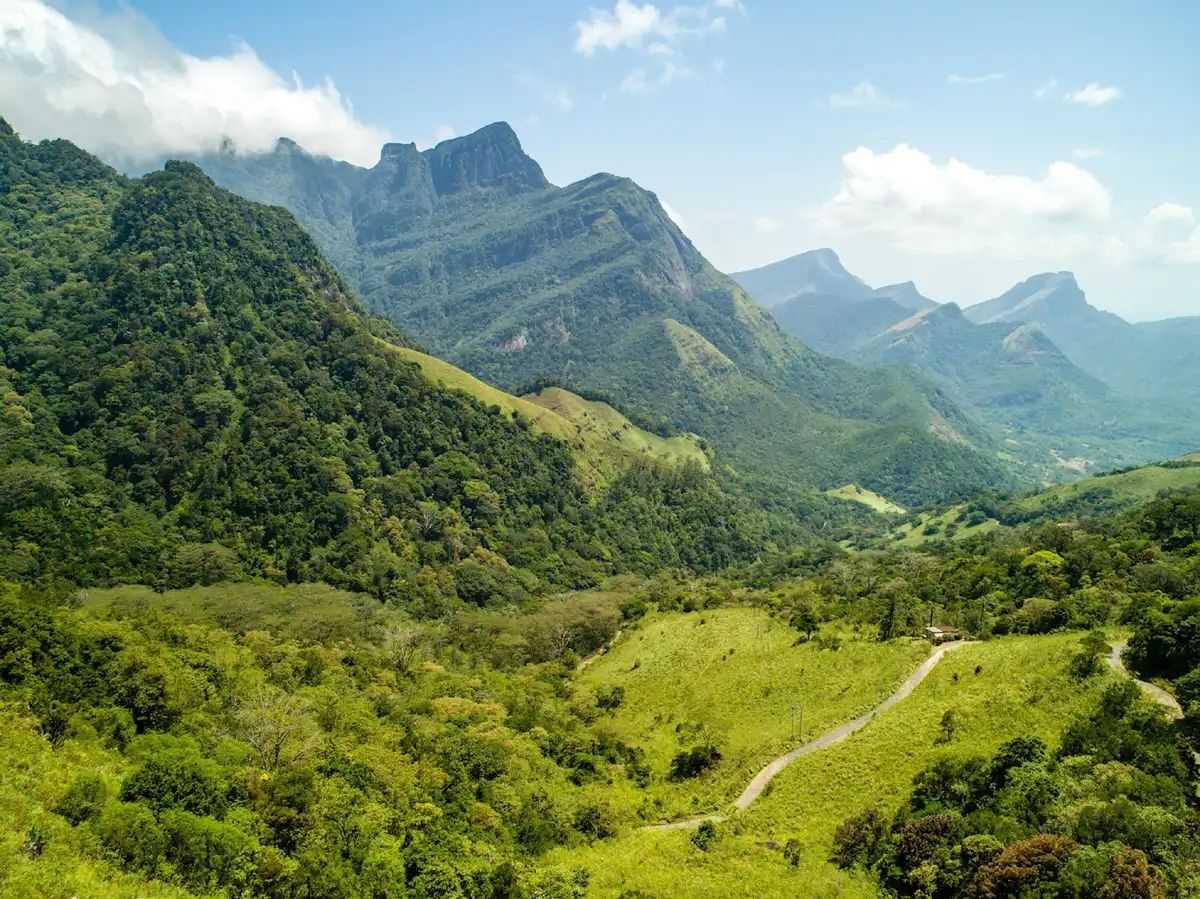
The Sri Lanka Coast to Coast Trail is a 276 mile (444km) route taking you from the west coast village of Waikkal to Pasikuda Beach, on the east coast. You’ll head inland and up into the highlands, where spice and tea plantations are backdropped by the craggy Knuckles Mountains. You’ll descend to the east coast, which is an elephant corridor, down which hundreds of elephants migrate annually.
This route was designed by Peter Bluck, who has lived in Sri Lanka for over two decades and runs a cycle touring company there.
“Sri Lanka has become popular very quickly, so everyone tends to be clustered in these backpacker hostels or hotels, where I don't always think you get the true Sri Lanka,” he says.

“But once you get into the interior, you get that kind of freshness and vibrancy; there’s no overtourism. The best thing about being on a bike is you're immediately off the main tourist trail. The route goes through small villages that seldom see tourists, so that's very refreshing. You're seeing the country as it is. We're away from the menaces of buses.”
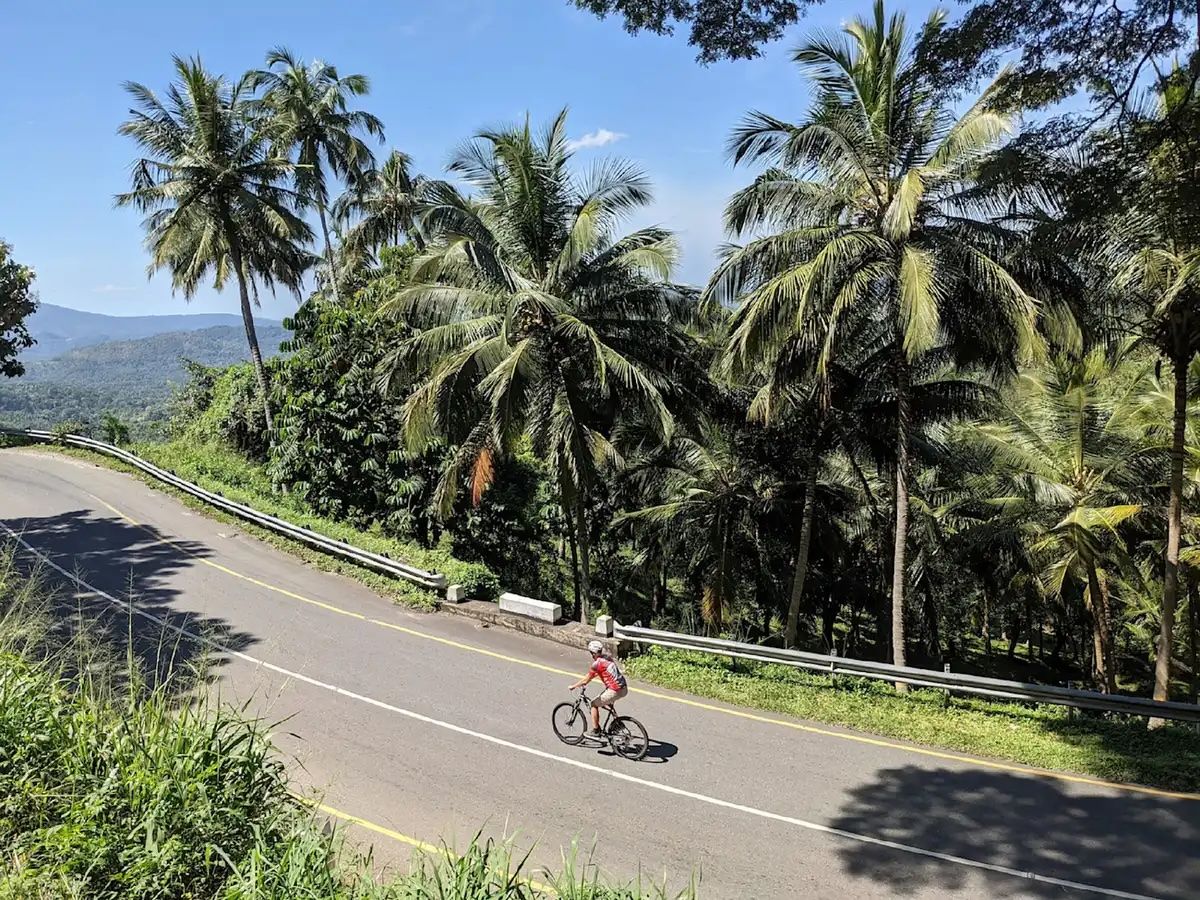
After leaving Waikkal, you’ll cycle inland across the coastal belt; flat land lined with coconut palms, rice paddies and farmland.
“You’ll see a lot of churches, which is a bit of a surprise to people,” Peter says. “It's a Christian quarter. On a Sunday morning where the people are coming back from church, all the kids will wave at you.
You may see farming at some points; hand tractors turning up the soil and all the egrets flying in to get the small frogs and leeches
“Then it starts to thin out. There’ll be rice fields either side of the road and a few bits of jungle. And there's always interesting roadside shrines, people with little vegetable stores. You've got these barrows with mangoes piled up into triangles. You may see farming at some points; hand tractors turning up the soil and all the egrets flying in to get the small frogs and leeches. You’ll pass villagers; a lot of them are going to be on bicycles. In that part of the country, people still wear sarongs.”
Break the journey near the town of Kuliyapitiya – there’s a coconut estate where you can stay. To reach it you’ll cycle across an elevated bund, or embankment, with paddy fields submerged in water on either side. People grow lilies and lotuses there – you might see them on an inner tube, picking them to sell at the temple in the evening.
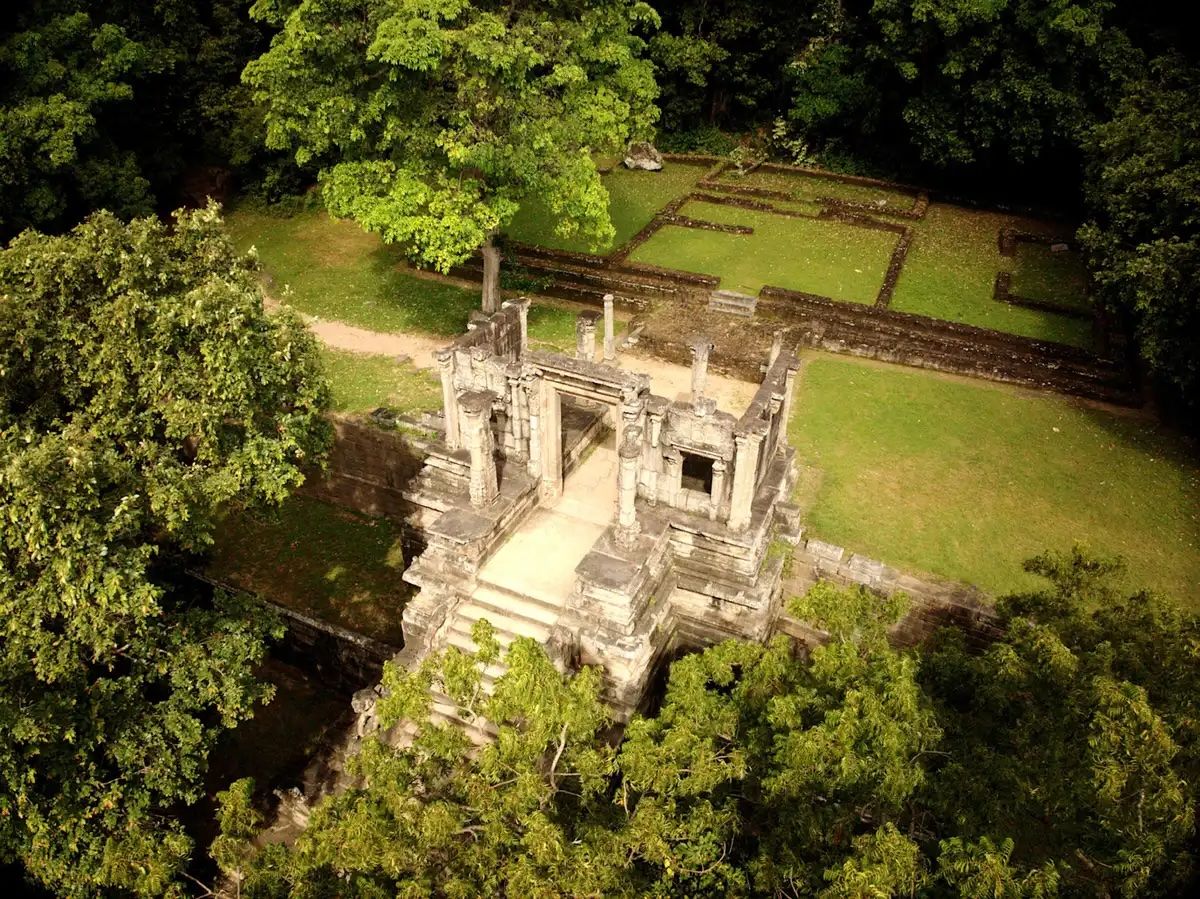
The second stage of the journey takes you further into rice country and past the Dedra Oya reservoir, where you’ll cycle along the dam wall. You’ll trace quiet back roads to Yapahuwa, a 13th-century citadel located on top of a granite rock rising 100 metres from the plains. It can be accessed by a magnificent rock cut stairway, adorned with carvings.
“There’s zero tourists there, because it's not on the main tourist trail,” Peter says.
From Yapahuwa, you’ll head uphill, past a landscape of rocky outcrops and forested monoliths into Sri Lanka’s spice-growing region.
‘You’ll start seeing things like pepper creepers, cocoa pods and clove trees,” Peter says. “All the spices you're going to see in the market, and try in local dishes, you'll see growing in nature.”
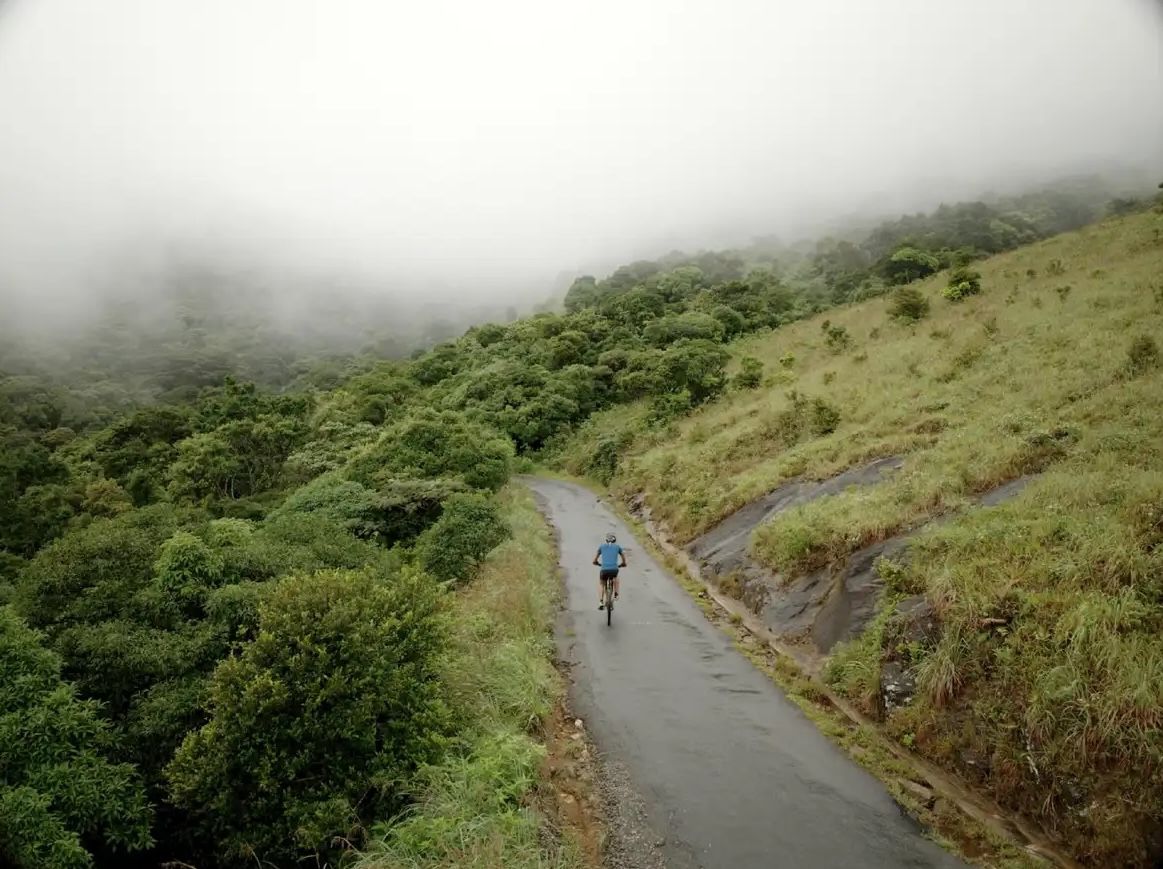
On the fourth stage of the route you climb steadily up towards Riverston, in the Knuckles Mountains. This UNESCO-protected conservation area is known for its exceptional biodiversity, with a landscape of montane rainforest, sprawling grasslands and the misty blue silhouettes of the mountains themselves, bursting out of the tree cover like clenched fists (hence the name). You’ll also pass through tea plantations, hillsides carpeted with emerald green plants.
This is the toughest section of cycling, with undulating topography and some steep uphill climbs – 1,525m (5,003 ft) across the day.
“It is a tough day, but it's shorter by design,” Peter says. “I don't think it matters if the hills are too steep, people can always push their bikes for 15 minutes. They can also stop and take pictures, getting a break while enjoying the scenery.”
Wasgamuwa is one of the least visited parks. It’s a bit rough and ready, but that's part of its charm
Descending on the other side of the Knuckles, you’ll barely encounter a soul, as you’re heading very much off the tourist trail. Follow jungle-lined roads past Kalu Ganga reservoir and into Wasgamuwa National Park.
“Wasgamuwa is one of the least visited parks. It’s a bit rough and ready, but that's part of its charm,” Peter says. “Because it's a little bit overgrown, it's a little bit difficult to see the elephants who live there, but when we encounter them it's really special.”
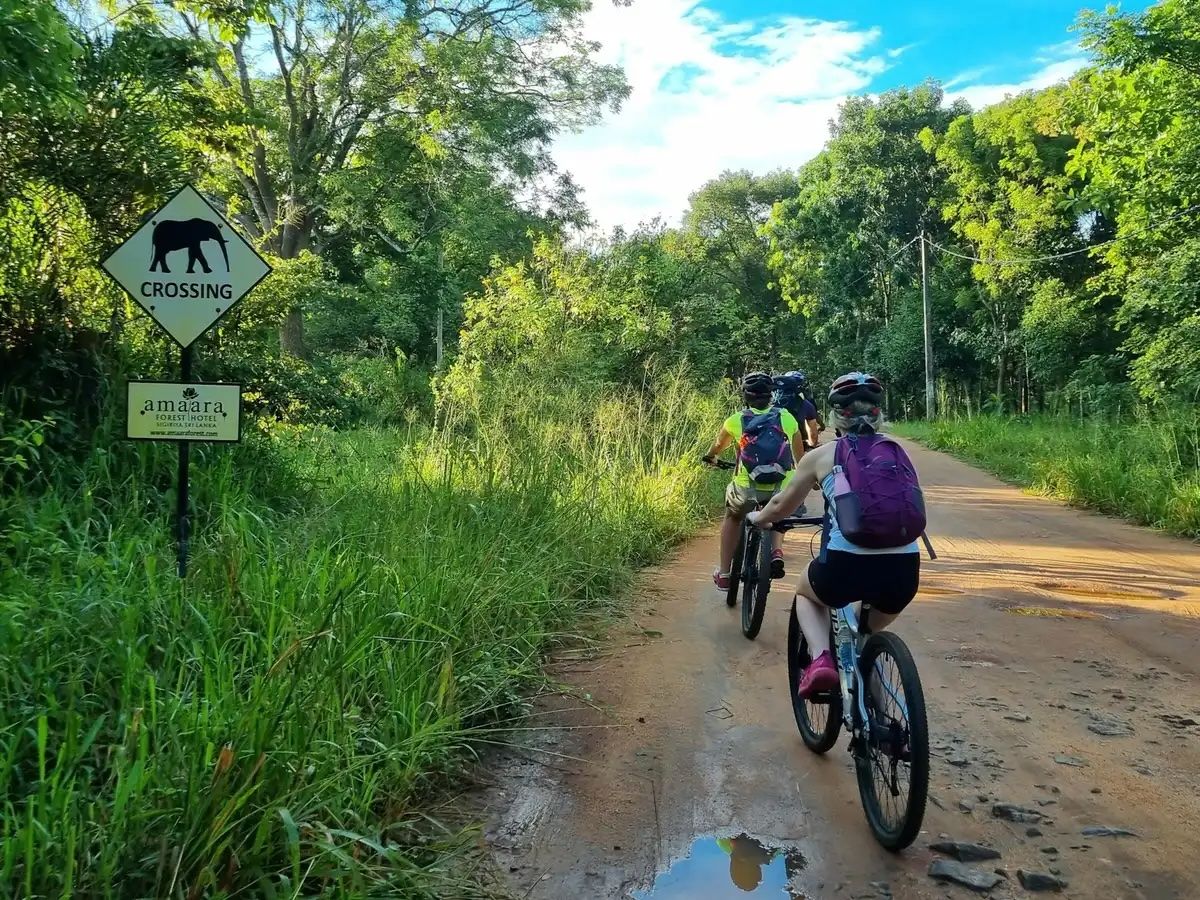
From Wasgamuwa, you’ll cycle to the town of Welikanda via Sri Lanka’s ‘elephant corridor’, a migratory route for elephants travelling to Maduru Oya National Park. The route takes you along irrigation canals and through small, sleepy villages.
“It feels like it’s 20 or 30 years behind current Sri Lanka; because of the conflict, it didn't see tourism in the same way,” Peter says. “So it's like stepping back in time. You might see people ploughing their fields with buffalo, for example.”
The final day’s ride takes you towards the coast through flat, predominantly agricultural terrain.
It's an interesting landscape because it's flat, and then you've just got these giant rocks sticking out in the middle of nowhere
“It's an interesting landscape because it's flat, and then you've just got these giant rocks sticking out in the middle of nowhere. They almost have your name calling to you that you've got to go and visit them,” Peter says.
“You’ll pass sugar cane plantations and poor rural communities, where you’ll see people collecting firewood – they’ll have a big stack of logs on the back of their bikes. You’ll also pass some small lakes where you’ll see people fishing on small, brightly-painted wooden catamarans.”
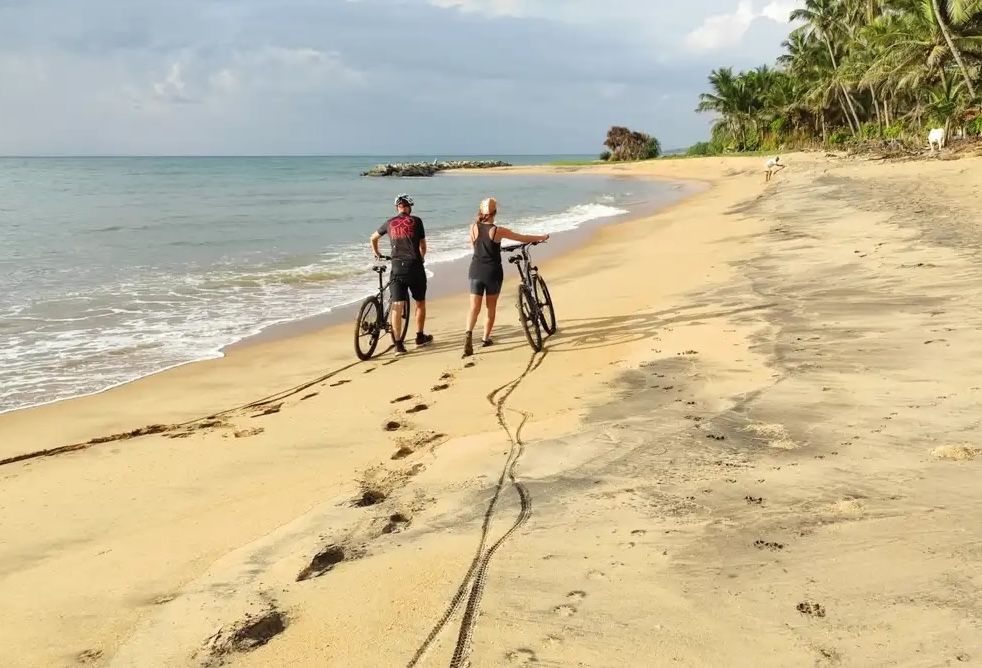
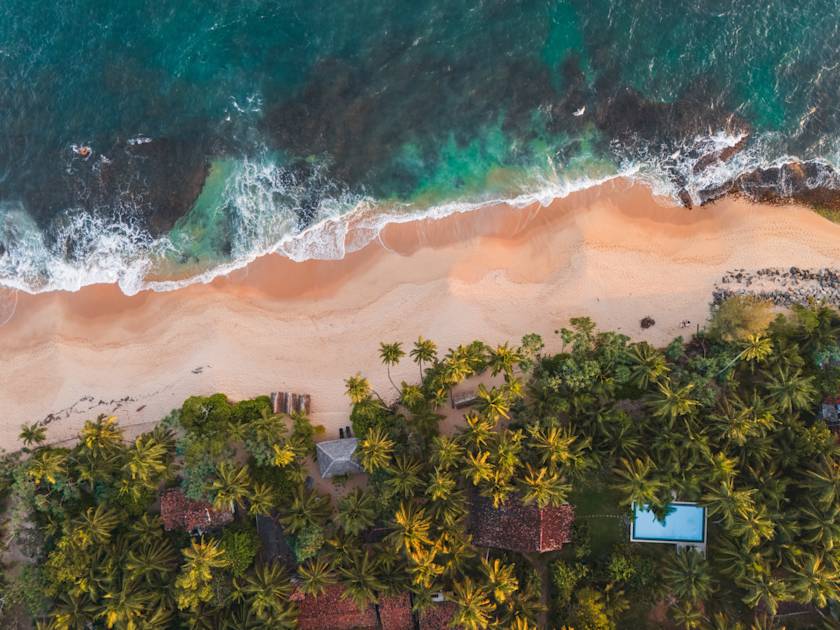
Your final destination: Pasikuda Beach, a curved sandy bay facing the Indian Ocean. The calm waters are an ideal spot for a celebratory dip.
Travelling coast to coast, without breaks for vehicle transfers, gives cyclists a real sense of achievement. The route is doable for most confident riders – Peter says the biggest challenge is the heat.
“Sri Lanka is six degrees above the equator, so when it gets hot at midday, it's very, very hot,” he says. “We've designed stages which are around four hours on a bike. Then you reach the hotel; you can cool off and then do some exploring in the afternoon. But if you ride slowly and drag it out to five hours, you’re going to be baked.
If you're not heat tolerant you probably need to be quite an experienced cyclist.
“I would say if you're not heat tolerant you probably need to be quite an experienced cyclist. Although, the advantage of cycling is you've got natural air conditioning, because if you ride at a certain speed, although you're expending energy, you're cooling down from the headwind you're making.”
Despite the heat, Peter firmly believes that the best way to see Sri Lanka is on two wheels. It allows you to get away from the tourist resorts dotting the west coast, and discover a more authentic version of Sri Lanka. In doing so, you are also spreading the impact of tourism so it better benefits locals.
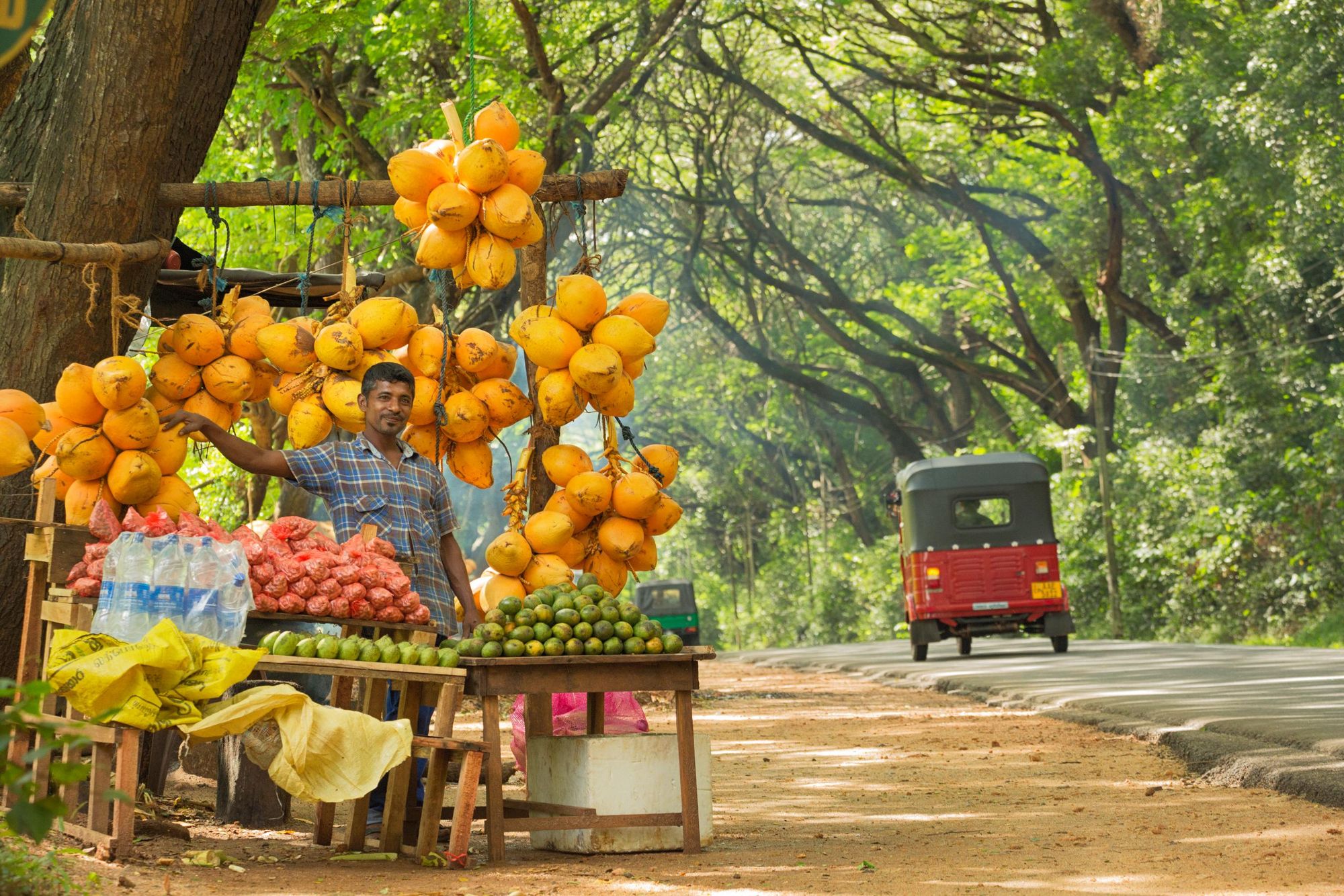
“We stop in all the local tea shops and use them as the muster points, so we're spending money there,” he says. “A lot of the lunch stops are with local houses. They will be cooking lamprais or string hoppers for us. So, they get some money back from that. All the hotels we use are not part of chains; they are family-owned businesses.
“All our guides are Sri Lankan. We’ve also tried to elevate the status of guiding. At first their families weren’t necessarily impressed they were going to be cycle guides but we pay them well. They get a lot out of it, especially in the high season, because they get tips and also pension funds – they are all permanent employees. We also have a bike shop, where they work during the off-season, when there aren’t any tours.”
Crossing Sri Lanka from coast to coast, then, is both beneficial to locals and to the cyclists themselves. You'll have the chance to experience Sri Lanka not as a series of isolated highlights, but as a connected landscape.
The route reveals a side of the island that many travellers never see: small farming communities, roadside tea shops, spice gardens and national parks where wildlife still moves along ancient corridors. Travelling by bike slows everything down, making it easier to notice the details of the environment, and the steady rhythm of rural life unfolding around you.
Inspired? Check out our Cycle Sri Lanka Coast to Coast Adventure, which takes you along the route Peter designed.